
Our research areas: Pt. II—Decolonization of Knowledge
Our three-year study explores potential connections between research-creation academics and artists and creators in the world, focusing on four areas of discovery where research-creation methodologies could offer practical insights to the wider artistic, creative and innovation communities. This series of blog posts expands on each of our research areas.
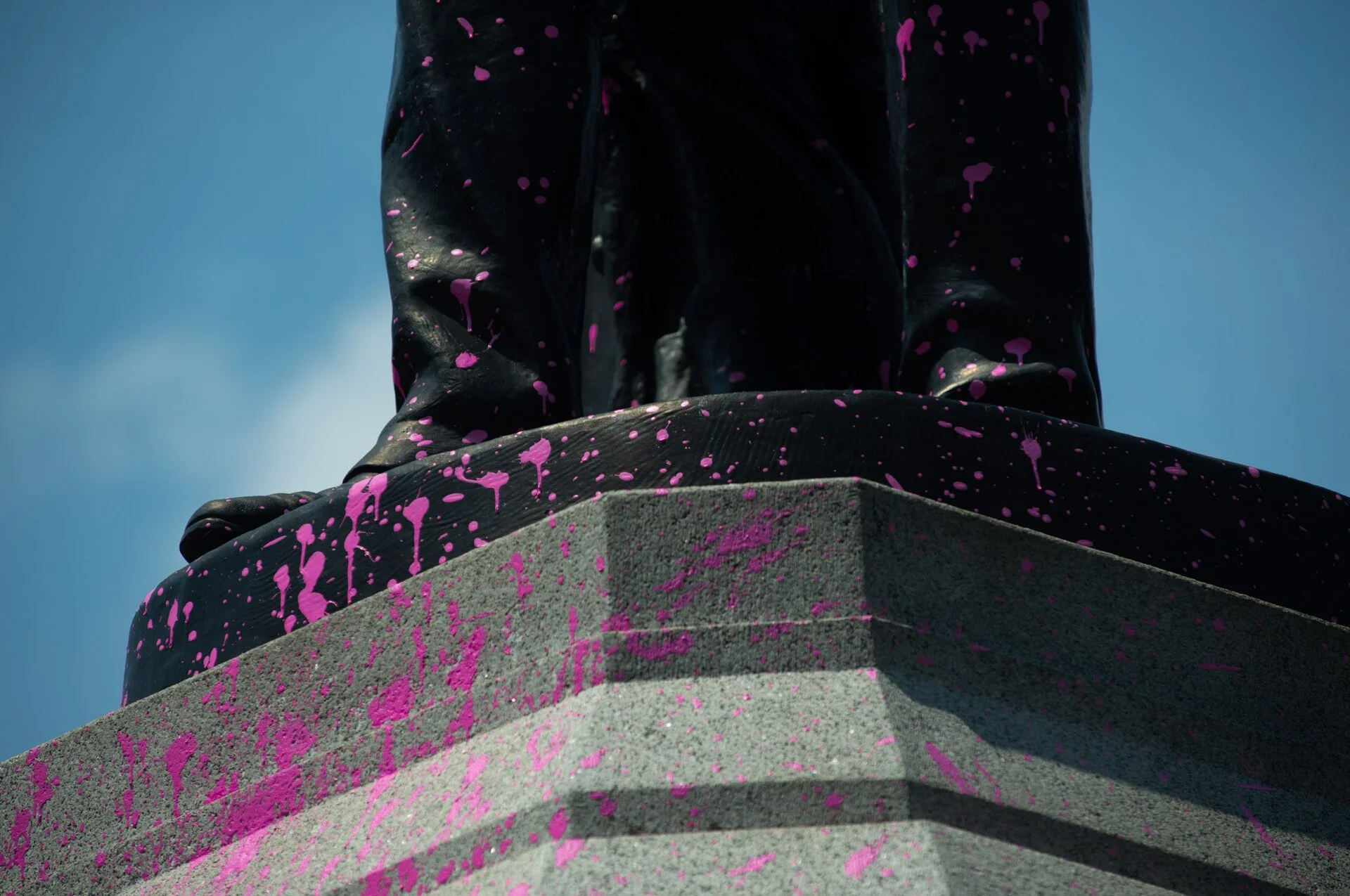
Black Lives Matter protesters splatter paint on statues at the Ontario legislature and then-called Ryerson University, 2020. By Jason Hargrove, CC-Attribution 2.0 Generic license, Wikimedia Commons
Since beginning to engage with research-creation a few years ago, I have found it to be a Pandora’s box for thinking about the tensions that exist in art and creative practice on one hand, and higher education on the other. These divides surface:
in the opposition between theory and practice (as explored in our last post),
between vernacular, tacit, and academic ways of knowing,
between the arts and the sciences,
between fine arts, community arts and craft,
between writing and making,
and so on.
The question of legitimacy lies at the heart of all of this. The technocratic, positivist, and colonial logic that organizes academic life in North America and beyond still dictates what kind of research, and by whom, is deemed the most rigorous, successful, and the best signifier for universal truth. On the flip side, this logic also points to which forms of inquiry are considered partial, and who is excluded from the conversation altogether.
As a process-based method, we find research-creation to be a vehicle for critiquing these systems; and because research-creation is based on process, not on outcome, it takes into account many factors that constitute the researcher beyond their skills and professional background. Their positionality and life history can also inform the perspective they bring—not only can their identity not be fully separated from their practice, but, in many occasions, it is central to the process of creation in and of itself.
That's why research-creation practitioners tend to engage with both theory and practice from an intentionally personal, localized lens, even if that intention is subtle and not central to the research. (In Teaching to Transgress, bell hooks encourages her readers to create theory from their lives, as lived experience presents multifaceted, and urgent, positions from which to theorize.) When a researcher is considering their positionality, there are theoretical foundations that can ground the personal qualities of individual creativity in a broader and more structured context. This is what author Lauren Fournier conceptualizes as autotheory, which is a reflexive activity that connects living, creating, writing, and theorizing.
Both autotheory and research-creation can be useful frameworks to engage in, and disseminate, knowledge, practices and ideas that go beyond the grounds of what currently constitutes a legitimate mode of engaging with research: they make room for ways of knowing that have always existed, but have rarely been accredited in the space of the university.
References:
Fournier, L. (2021). Autotheory as Feminist Practice in Art, Writing, and Criticism. The MIT Press.
hooks, b. (1994). Teaching to Transgress: Education as the Practice of Freedom. New York, NY: Routledge.

.jpg)